

Family Law in Provincial Court or Supreme Court in BC
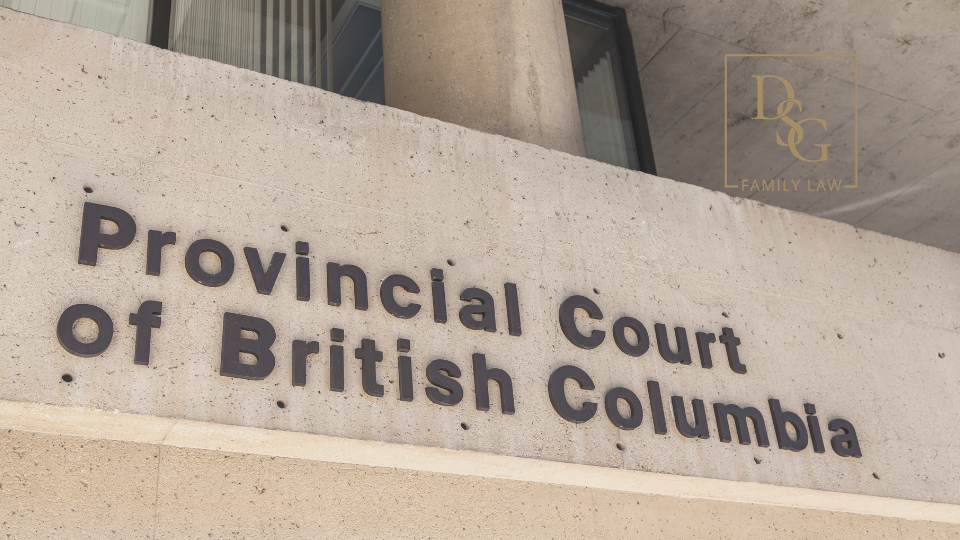
Which Family Court Should I Go To?
If you are working through a family law matter in British Columbia and need to file a Notice of Family Claim, choosing between the Provincial and Supreme Court is one of the first important decisions you will need to make.
Your decision can have significant consequences. Both courts can handle many of the same issues but they operate under different rules, costs, and powers.
Where you file for spousal support or parenting time, for instance, can impact how much you pay, how long it takes, and what kind of orders you can get from the court.
Let’s take a deeper look at this, so that you can make an informed decision about whether to opt for the Provincial Court or the Supreme Court with any family law issue.
Provincial Court vs Supreme Court: Main jurisdictions
Many family law matters in British Columbia are heard in the Provincial Court, which is often seen as more “accessible” than the Supreme Court.
However, the Supreme Court can hear all matters related to family law and has exclusive jurisdiction over divorce and property division.
To file a Notice of Family Claim, which begins the legal process, you will first need to visit the family law registry and decide if you are going to go to B.C. Provincial Court or the B.C. Supreme Court. Here is a quick breakdown of their respective jurisdictions:
| Matter | Provincial Court | Supreme Court |
| Divorce | No | Yes (Exclusive) |
| Property & Debt Division | No (except companion animals) | Yes (Exclusive) |
| Parenting & Guardianship | Yes | Yes |
| Child & Spousal Support | Yes | Yes |
| Protection Orders | Yes | Yes |
| Adoption | No | Yes |
The underlying difference between the two courts is that the Provincial Court handles matters under the Family Law Act, whereas matters dealt with under the federal Divorce Act must be heard in the Supreme Court.
Main differences between the Provincial Court and the Supreme Court
Let’s break down the main differences between opting for the Supreme Court and Provincial Court in B.C.
The cost factor
The costs in Provincial Court are generally lower than in the Supreme Court. For instance:
- The Provincial Court has no filing fees, which makes it more accessible for self-represented litigants.
- The Supreme Court applies filing fees of $200+ to start a claim, and other fees may be required for most applications.
Families in B.C. should bear in mind, however, that the Supreme Court judges can award legal costs to the “winning” party, whereas the Provincial Court generally does not. This can offset the extra fees incurred for litigants.
Complexity and formality
The Provincial Court is more user-friendly with its forms and rules. Less formal, oral evidence is also often permitted to support cases. This makes the process simpler for those without legal representation.
For litigants in the Supreme Court, more formal and rigid procedures should be anticipated but those who have hired a family lawyer will have legal guidance to help navigate these hurdles.
In the Supreme Court, evidence is primarily submitted through written affidavits. The process is, therefore, significantly harder to navigate without a lawyer.
Accessibility
Provincial Courts in British Columbia are more numerous and located in smaller communities than the Supreme Court.
It’s generally best to file in the court closest to where you live. For most families in Langley, the Provincial Court, located on 203rd Street, is considered easily accessible and acts as a local hub to handle family matters.
Langley does not have a resident Supreme Court justice. Those filing in the Supreme Court must often travel to the New Westminster Law Courts or Abbotsford Law Courts for their hearings.
However, the extra distance to cover may be a relatively minor consideration if the stakes are high in a family law dispute.
When must couples choose the Supreme Court of BC?
Couples who are married and want to divorce must file in the Supreme Court, as the Provincial Court in B.C. does not have jurisdiction over divorces.
The division of marital property, such as real estate, pensions, investments, and other significant assets, must also be settled in the Supreme Court.
Around 90 percent of divorces in B.C. end up proceeding as “uncontested” in the Supreme Court, with no trial necessary. Alternative dispute resolution methods are widely used but achieving a negotiated or mediated settlement can be challenging without legal assistance.
Where do common-law couples file for property division in BC?
Couples who have lived in a marriage-like relationship continuously for two years or more (and are considered common-law partners) enjoy many of the same rights and protections as married couples in British Columbia.
To divide property and debts, such couples should file in the Supreme Court.
When can couples choose between the Provincial and Supreme Court in BC?
Married or common-law couples can choose either court for matters like:
- Spousal support
- Child support
- Parenting
- Guardianship
- Protection orders
If you are common-law partners and your only issues are parenting or support, the Langley Provincial Court is often the faster, more affordable choice.
However, legally married couples seeking a divorce (with or without children), or who need to divide assets like the family home or a business, must file in the Supreme Court.
Can you use both courts (a “split” approach)?
During divorces in British Columbia, some couples handle parenting/support in Provincial Court and then move to the Supreme Court only for the divorce proceedings.
While this approach can save money in fees, overlapping or conflicting orders can create confusion. The process may also involve separate legal preparation and extra paperwork. It is generally advisable to choose the Supreme Court (i.e., the one court) for clarity and efficiency.
What will happen if I apply to the wrong court?
Choosing the wrong court can lead to your case being dismissed or delayed. It’s generally best to seek legal advice before filing so that you understand the full range of legal options first.
Ultimately, if the matter involves only protection orders, support, or parenting, the Provincial Court might be your best bet. If asset division and/or a divorce are involved, the Supreme Court is necessary.
If you are in the Langley area of British Columbia and need legal assistance with a family law matter, DSG Family Law offers a free initial consultation to assess your situation and outline your legal options. Speak with a family lawyer today.
At DSG Family Law, we are pleased to offer a free confidential consultation to discuss the particulars of your family’s situation. During this no-obligation meeting, you can share your concerns and goals with one of our experienced lawyers. We understand that every family’s circumstances are unique, and we want to ensure that we can provide you with the best guidance tailored to your specific needs.
We offer Flat Fees for Uncontested Divorces and agreements. This transparent pricing structure allows you to have a clear understanding of the costs involved upfront, ensuring no surprises along the way.
DSG Family Law is committed to providing you with strategic & compassionate guidance for all your family law needs, with clear solutions to complex matters.
Schedule your free initial consultation today and let us take the first step towards finding the best solutions for you and your family.
